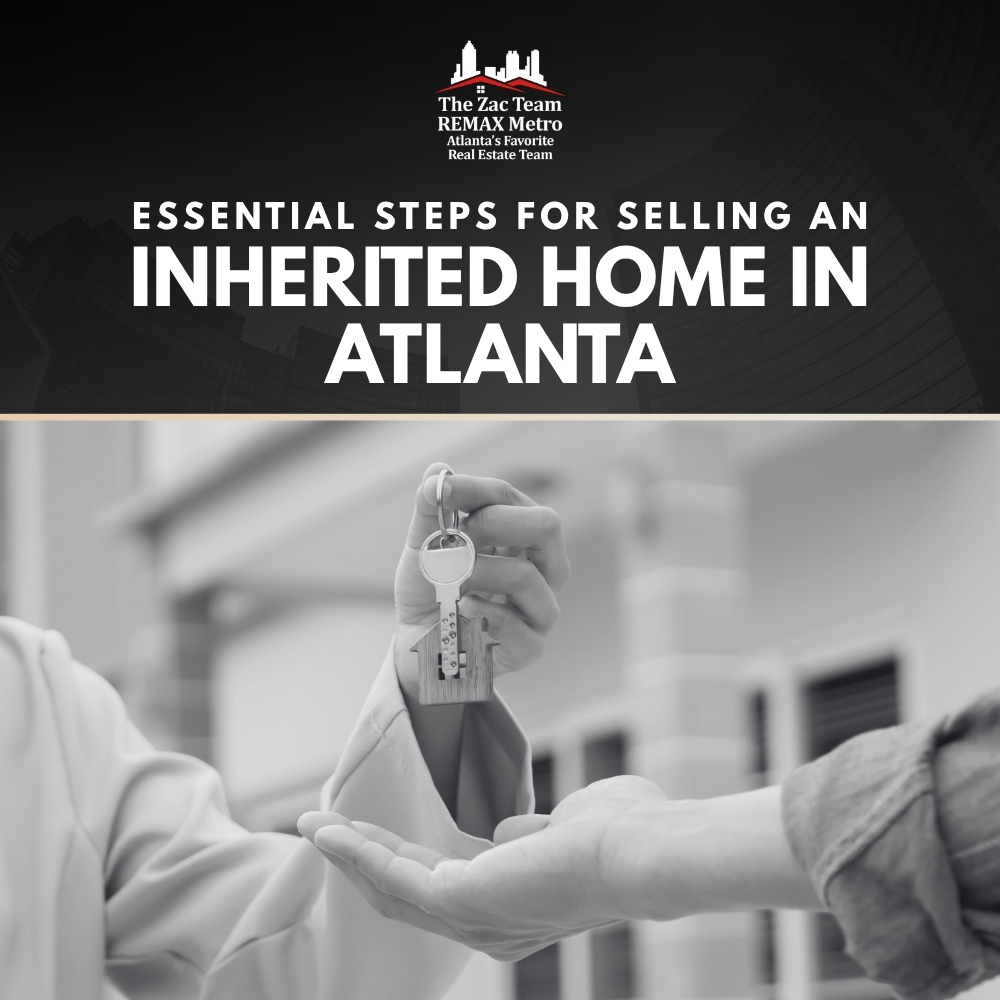
Essential Steps for Selling an Inherited Home in Atlanta
Inheriting a home can bring financial opportunities, but it can also create difficult decisions during an already emotional time. From settling legal paperwork to deciding whether to renovate, selling a family home in Atlanta requires careful planning and coordination among heirs.
This Atlanta inherited home sale guide explains the essential steps, including Georgia probate requirements, property valuation, tax considerations, and selling strategies.
Whether you are preparing a longtime family residence for the market or managing an estate with multiple beneficiaries, understanding your options can help you make informed decisions and avoid unnecessary expenses.
Understanding the Legal Standing of the Home
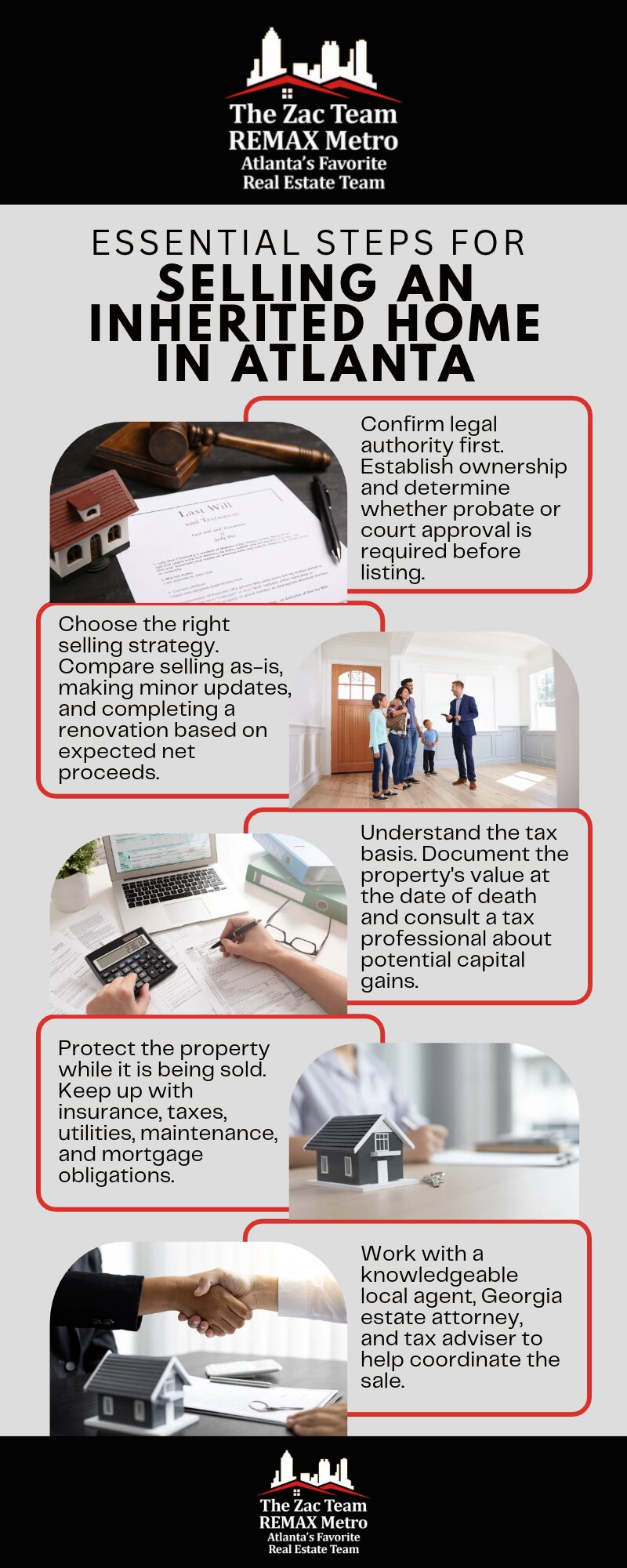
Selling an inherited home in Atlanta first requires establishing legal ownership, which often involves navigating the Georgia probate process. Once the court officially appoints an executor or administrator, that individual gains the legal authority to list the home, manage the sale, and distribute the proceeds to the rightful heirs.

Navigating Atlanta Probate Real Estate
The Probate Process
Before advertising inherited homes for sale, determine whether probate is necessary and what authority the estate representative has received.
In Georgia, probate generally involves validating a will when applicable and administering the deceased person's estate. The process may include appointing an executor or administrator, identifying assets and debts, notifying interested parties, and resolving estate obligations. If the property is solely owned by the deceased, probate administration may affect when and how it can be sold.
The timeline varies depending on the estate's complexity, whether anyone contests the will, creditor issues, and whether court approval is required for the transaction. Some estates move relatively quickly, while others take months or longer.
Consult a Georgia probate attorney before setting a firm listing date. The attorney can explain whether the personal representative has the necessary authority, whether beneficiaries must consent, and what documents a closing attorney will require.
Alternatives to Probate
Not every inherited property must pass through the same probate process. A home held in a properly structured living trust may be managed by a successor trustee under the trust's terms. Property owned with a surviving co-owner under a valid right of survivorship may also transfer outside probate.
Other arrangements, including certain beneficiary designations or estate-planning instruments, may affect how ownership passes. The details matter, so do not assume that being named in a will automatically makes you the legal owner or gives you immediate authority to sell.
Confirm the title and applicable documents before proceeding with a sale of inherited property in Atlanta.

Evaluating and Preparing the Acquired Home in Atlanta
To Renovate or Sell As-Is
One of the biggest decisions when selling an acquired home in Atlanta is whether improvements will generate enough additional proceeds to justify their cost.
Inherited homes sometimes need roof repairs, updated electrical systems, plumbing work, fresh paint, or other maintenance. However, a full renovation is not always the most profitable choice. Buyers may accept an older home if the price reflects its condition and the location meets their needs.
Ask a local real estate agent to compare recent sales of similar homes in renovated, average, and as-is condition. Then obtain estimates for essential repairs and cosmetic updates.
Consider three approaches:
- Sell as-is: Suitable when the estate needs a straightforward sale, funds are limited, or repairs would be expensive.
- Make minor updates: Fresh paint, deep cleaning, landscaping, and small repairs may improve presentation without requiring a major investment.
- Complete a full renovation: Potentially worthwhile when local comparable sales support the higher price and the estate can afford the cost and delay.
Selling as-is does not automatically remove disclosure obligations. Georgia sellers should understand which property conditions must be disclosed and how the home's condition affects the transaction. An agent and real estate attorney can help clarify the applicable requirements.
Clearing Out the Family Home
Sorting through a loved one's belongings can be one of the most challenging parts of selling a family home in Atlanta. Give heirs time to identify sentimental items, important documents, collectibles, and valuables before arranging a cleanout.
An estate sale company can help price and sell household goods. Donation organizations may accept usable furniture and clothing, while professional removal services can handle unwanted items. Before disposing of paperwork, check for deeds, insurance policies, mortgage statements, tax records, and other documents relevant to the estate.
Once the home is cleared, arrange a thorough cleaning and address obvious safety issues. A tidy, well-maintained property is easier for prospective buyers to evaluate, even when it is being sold as-is.

Tax Implications of Selling Inherited Real Estate
The Step-Up in Basis
Understanding taxes is essential when selling inherited real estate. Under general U.S. federal tax rules, inherited property typically receives a step-up in tax basis to its fair market value on the date of the previous owner's death. Certain exceptions apply, and special valuation rules may affect the result.
For example, suppose a parent purchased a home for $150,000, and its fair market value was $350,000 when they passed away. If the heir inherits the property with a $350,000 tax basis and later sells it for $360,000, the starting point for calculating the gain is generally $350,000 rather than the original $150,000 purchase price. Eligible selling expenses and other basis adjustments may further affect the taxable gain.
This can significantly reduce potential capital gains taxes, but it does not automatically eliminate them. The actual outcome depends on the property's value, subsequent improvements, selling expenses, ownership structure, and applicable tax rules.
Keep a record of the property's value at the date of death, preferably supported by a qualified appraisal or other reliable valuation. A tax professional can help determine the correct basis and reporting requirements.
Property Taxes and Upkeep
Until the property closes, someone must keep up with property taxes, insurance, utilities, lawn care, and necessary maintenance. The estate or responsible owner should confirm which expenses must be paid and how they will be handled.
Contact the insurance provider to confirm that coverage remains appropriate for a vacant or inherited property. Standard homeowners insurance may have restrictions relating to vacancy, so do not assume the existing policy will cover every situation.
Also, check the mortgage balance, property tax status, and any recorded liens before closing. Unpaid obligations can complicate the transaction and reduce the net proceeds available to beneficiaries.

Next Steps for Atlanta Sellers
Partnering with a Probate Specialist
Selling an inherited property involves more than marketing a house. A real estate agent experienced in estate sales can help coordinate showings, evaluate offers, recommend preparation strategies, and work with the estate attorney and closing professional.
Look for an agent with demonstrated experience in inherited properties and probate-related transactions. Ask how they handle multiple heirs, as-is listings, estate documentation, and communication when beneficiaries live in different locations.
A probate-related certification can be useful, but verify the agent's actual experience and credentials rather than relying on a title alone. The right professional should understand the process while respecting the family's circumstances.
Getting a Professional Appraisal
Before deciding on an asking price, request a comparative market analysis (CMA) from a local agent. This evaluates recent sales of similar homes, current competition, location, property condition, and other factors that influence value.
A formal appraisal may also be appropriate, particularly when the estate needs a defensible valuation for tax reporting, disagreements among heirs, or other legal and financial purposes.
Market conditions matter, too. Georgia MLS reported a median residential sale price of $387,500 across its 29-county Atlanta metropolitan area in September 2026. That figure provides broad context, not a valuation for any particular home. Neighborhood, size, condition, and comparable sales will determine a more meaningful price.
For an acquired home Atlanta sellers are preparing for the market, the goal is to establish a realistic price that accounts for both its condition and its likely buyer pool.
As-Is vs. Renovated Sale Comparison Table
The best selling strategy depends on the property's condition, the estate's available funds, and the time beneficiaries can afford to wait.
| Selling Strategy | Upfront Costs for the Estate | Time to Sell | Target Buyer Pool | Potential Profit |
|---|---|---|---|---|
| Selling As-Is | Low; usually limited to cleanout and basic preparation | Potentially faster, depending on price and buyer financing | Investors, renovators, and buyers willing to make repairs | May be lower because buyers account for repair costs and risk |
| Minor Updates | Moderate; paint, cleaning, landscaping, or small repairs | Moderate; preparation may take days or weeks | Owner-occupants and buyers seeking a move-in-ready home | May improve marketability and sale price relative to the cost |
| Full Renovation | High; potentially includes kitchen, roof, HVAC, and other major work | Often longer because of construction and inspections | Buyers seeking extensively updated homes, including higher-end buyers where appropriate | Could be higher, but renovation costs and market risk can reduce net proceeds |
Remember to compare net proceeds, not just the expected sale price. A higher offer after renovation may leave the estate with less money once contractor costs, holding expenses, financing, and additional time are considered.
Honoring the Legacy with a Smooth Transition
Selling a loved one's home can feel like a major responsibility, especially when legal paperwork, family decisions, and financial concerns arrive at the same time. A clear plan makes the process more manageable.
Start by confirming legal ownership, establishing who can authorize the sale, and determining whether probate is required. Then evaluate the property's condition, compare as-is and renovation options, understand the tax implications, and obtain a realistic market valuation.
Whether you are coordinating Atlanta probate real estate or preparing an inherited home for its next owner, experienced local guidance can help you avoid preventable delays and make decisions with confidence.
If you need help assessing an inherited property, choosing a selling strategy, or understanding your next steps, contact me today at +1 (404) 564-7272 or zac@zac.biz to discuss your situation.
Frequently Asked Questions
Do I have to go through probate before selling an inherited home in Atlanta?
It depends on how the deed was held. If the property was solely in the deceased's name, it must go through Georgia probate. If it was held in a living trust or owned jointly with right of survivorship, it may bypass probate entirely.
What is a step up in basis when selling inherited real estate?
A step-up in basis means the property's value for tax purposes is adjusted to its fair market value on the date of the owner's death. This prevents heirs from having to pay massive capital gains taxes based on the original, historically lower purchase price.
Can multiple heirs be involved in selling a family home in Atlanta?
Yes, if the will leaves the property to multiple heirs, they must all agree on the sale terms, or the appointed executor must have the explicit legal authority granted by the probate court to sell the property on behalf of the estate.
Should I renovate an acquired home in Atlanta before selling it?
This depends on the estate's available funds and timeline. While renovating can maximize the final sale price, many families prefer selling 'as-is' to avoid the stress, upfront costs, and delays of managing contractors during a grieving period.
How do I determine the value of inherited property in Atlanta?
The most accurate way to determine value is to hire a licensed appraiser or have an experienced local real estate agent perform a comprehensive Comparative Market Analysis (CMA) based on recent sales of similar homes in the neighborhood.
Are there specialized agents for Atlanta probate real estate?
Yes, many real estate agents hold a Certified Probate Real Estate Specialist (CPRES) designation, meaning they are specifically trained to handle the legal timelines, court requirements, and sensitive family dynamics associated with estate sales.
What happens to the mortgage when selling inherited homes for sale?
If the inherited property still carries a mortgage, the estate must continue making monthly payments to avoid foreclosure. Once the home is sold, the remaining mortgage balance is paid off entirely using the proceeds from the sale before funds are distributed to heirs.
Recent Posts