Understanding Property Easements Before Buying in Atlanta
Buying a home involves more than evaluating its layout, location, and market value. Buyers should also understand the legal rights and restrictions attached to the land. One important consideration is property easements in Atlanta, which can affect how you use, maintain, and modify your property.
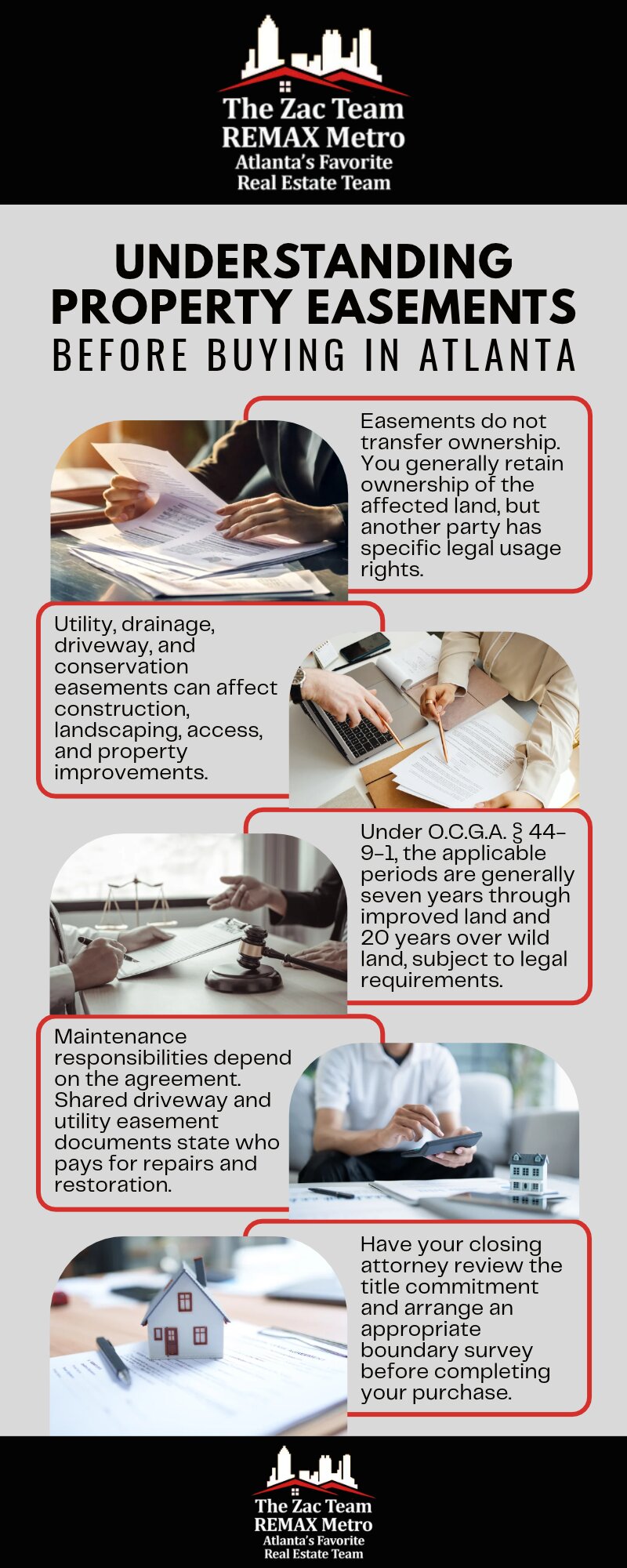
An easement gives another party the legal right to use a specific portion of privately owned land for an established purpose. This might include accessing utility lines, maintaining drainage systems, or using a shared driveway. Although you still own the affected land, certain activities may be restricted.
Whether you are considering a historic home in Inman Park or a larger property in Alpharetta, understanding these restrictions before closing can help prevent unexpected complications.
This Atlanta property easement guide explains common easement types, Georgia property easement laws, maintenance responsibilities, and the steps homebuyers should take during due diligence.
What Are Property Easements in Atlanta?
Property easements in Atlanta are legal rights granted to a third party—such as utility companies, municipalities, or neighboring property owners—to access or use a specific portion of your land. While you retain full ownership of the property, these Atlanta real estate easements restrict where you can build permanent structures.
Common Types of Atlanta Real Estate Easements
Not all easements affect homeowners in the same way. Their purpose, location, and legal terms determine what you can do with the affected portion of your land.

Utility and Municipal Easements
Utility easements are among the most common easements Atlanta homebuyers encounter. They allow utility providers and government agencies to install, inspect, repair, and maintain infrastructure.
For example, Georgia Power, Atlanta Gas Light, and local water authorities may have easement rights involving:
- Underground electrical cables and overhead power lines.
- Natural gas pipelines.
- Water and sewer connections.
- Stormwater drainage systems.
- Telecommunications infrastructure.
These arrangements allow authorized workers to enter designated areas when necessary to maintain their facilities.
For homeowners, the main consideration is landscaping and construction. A utility easement might limit where you can install a swimming pool, build a shed, or plant large trees. Some landscaping and temporary improvements may be permitted, but the specific easement agreement and utility requirements determine what is allowed.
Shared Driveways and Access Easements
Shared driveways are particularly relevant in established Atlanta neighborhoods where homes sit close together and property layouts may be irregular.
An ingress and egress easement gives someone the legal right to enter and leave their property by crossing another person's land. This arrangement may benefit a neighboring homeowner whose garage or property entrance is accessible through a shared driveway.
Before purchasing a home with this arrangement, determine:
- Which properties have the right to use the driveway.
- Whether access is limited to vehicles, pedestrians, or both.
- Whether parking is permitted.
- Who handles repairs and maintenance.
- Whether the easement has specific usage restrictions.
Understanding these easement rights in Georgia can help you avoid disagreements with neighbors and establish realistic expectations about your property.
Navigating Georgia Property Easement Laws
Georgia property easement laws recognize several ways easements and private rights of way can be established. Understanding how these rights originate is important because not every easement will appear in the documents provided by a seller.

Express vs. Prescriptive Easements
An express easement is established through a written agreement or deed that grants another party specific usage rights. These documents generally describe the easement's location, purpose, and applicable conditions. Recorded easements may also appear on subdivision plats or other land records.
Georgia also recognizes prescriptive rights of way under O.C.G.A. § 44-9-1. The law generally provides for seven years of uninterrupted use through improved land or 20 years of use over wild land.
However, these periods do not mean that anyone who regularly walks or drives across another person's property automatically acquires an easement. Legal requirements must be satisfied, and courts examine factors such as the nature, continuity, and circumstances of the use.
This distinction matters because an existing access arrangement may create legal complications even when the original agreement is unclear. Buyers should have their closing attorney examine recorded documents and investigate any apparent access arrangements or historical property use that could affect ownership.
How Easements Affect Property Modifications
An easement does not necessarily prevent you from using the affected land, but it can restrict certain improvements. Before installing a backyard swimming pool, constructing a detached garage, or building a permanent fence, identify the exact location of any property easements in Atlanta.
For example, placing a retaining wall over a drainage easement could interfere with water movement or prevent maintenance crews from accessing underground infrastructure. Similarly, a utility provider may require the removal of landscaping or other improvements that obstruct necessary repairs.
Never assume that an easement is inactive simply because you cannot see any equipment or infrastructure on the surface. Review its terms and obtain approval from the appropriate easement holder before starting construction.
Clarifying Georgia Easement Maintenance Responsibilities
Maintenance is another important consideration when evaluating a property with existing easements. Buyers should understand who is responsible for repairs, landscaping, and potential damage before agreeing to purchase.
Who Pays for Upkeep and Repairs?
Georgia easement maintenance responsibilities depend on the easement agreement, the nature of the rights granted, and the parties involved.
Generally, an easement holder who benefits from and controls an easement may be responsible for maintaining the facilities or improvements associated with its use. However, this is not a universal rule, and the written agreement may establish different obligations.
For example, if a utility company excavates part of your backyard to repair an underground line, the agreement or applicable requirements may address how the disturbed area must be restored.
Homeowners should clarify whether restoration includes basic grading, soil replacement, landscaping, or replacement of damaged hardscaping. Do not assume that custom landscaping, decorative stonework, or expensive outdoor improvements will automatically be replaced.
Shared Driveway Maintenance Agreements
Shared driveway arrangements require particular attention because multiple property owners may depend on the same access route.
A written maintenance agreement can establish how neighbors divide expenses for:
- Pothole repairs and resurfacing.
- Gravel replacement and grading.
- Snow or debris removal, where applicable.
- Drainage improvements.
- Fallen tree removal and other necessary repairs.
Some agreements divide costs equally, while others allocate expenses according to usage or another agreed formula.
Before purchasing a home in Atlanta, ask whether a maintenance agreement exists and review its terms. Knowing your financial responsibilities beforehand can prevent disagreements after closing.
Next Steps for Atlanta Homebuyers
Discovering an easement does not automatically make a property a poor investment. The important thing is understanding its location, purpose, and restrictions before committing to the purchase.

Reviewing the Title Commitment and Boundary Survey
Two essential documents can help identify easement-related issues during your due diligence period.
Title commitment: Your closing attorney or title examiner reviews recorded property documents to identify easements, restrictions, liens, and other matters affecting ownership. Pay particular attention to the exceptions listed in the title commitment.
Boundary survey: A licensed land surveyor can identify property boundaries and show recorded easements when the relevant information is available. An updated survey can help you understand whether an easement crosses your driveway, backyard, or planned construction area.
Remember that a survey and title search serve different purposes. Neither should automatically be treated as a complete substitute for the other. Unrecorded or prescriptive rights may require additional investigation.
If you discover an easement that affects your intended property use, ask your closing attorney to explain its legal implications before your due diligence period expires.
Partnering with a Local Atlanta Specialist
Easement documents can contain technical language that is difficult to interpret without experience. Working with a knowledgeable Atlanta real estate agent and a qualified Georgia real estate closing attorney can make the process easier.
Your agent can help identify potential concerns, request relevant documents, and coordinate questions with the seller. Your attorney can review the legal language, explain your obligations, and advise you about any restrictions that could affect your purchase.
Having the right professionals involved helps you make an informed decision before your earnest money becomes nonrefundable under your purchase agreement.
Common Atlanta Property Easements Comparison Table
Different easements come with different responsibilities and restrictions. The following comparison highlights four types that buyers may encounter when evaluating Metro Atlanta properties.
| Easement Type | Who Holds the Right? | Typical Location on Lot | Impact on Homeowner |
|---|---|---|---|
| Utility Easement | Electric, gas, water, and telecommunications providers | Front, rear, or side property boundaries | May restrict permanent structures and allow utility access for repairs |
| Drainage / Sewer Easement | City or county public works departments or other authorized entities | Low-lying areas, rear yards, and drainage corridors | May restrict fences, sheds, grading, and other improvements that interfere with drainage |
| Ingress / Egress (Driveway) | Adjacent neighbors or other authorized property owners | Shared driveways and private access lanes | Homeowners generally cannot obstruct authorized access; maintenance obligations depend on the agreement |
| Conservation Easement | Land trusts or government entities | Wooded areas, natural buffers, and environmentally sensitive land | May significantly restrict development, tree removal, and changes to natural features |
Protecting Your Atlanta Real Estate Investment
Finding an easement during the homebuying process does not mean you need to abandon a property you love. However, you should understand exactly what rights another party holds and how those rights affect your plans.
By reviewing property documents, examining an updated boundary survey, and working with experienced local professionals, you can make better purchasing decisions.
Whether you are evaluating Georgia property easement laws, clarifying Georgia easement maintenance responsibilities, or identifying utility easements Atlanta properties may contain, careful due diligence helps protect your investment.
Planning to buy a home in Atlanta? Contact me today at +1 (404) 564-7272 or zac@zac.biz to discuss your homebuying plans and get help navigating the Atlanta real estate market.
Frequently Asked Questions
How do I find out if there are property easements in Atlanta on a home I want to buy?
Start by reviewing the title commitment, deed records, and recorded subdivision plat. Your closing attorney can identify recorded easements, while a licensed surveyor can help locate them on the property. Ask about any known informal access arrangements that may require further investigation.
Can I build a fence or shed over Atlanta real estate easements?
It depends on the easement agreement and the holder's requirements. Some easements permit certain fences or landscaping, while others prohibit permanent structures. Contact the easement holder and obtain any necessary written approval before beginning construction.
Who is responsible for Georgia easement maintenance on a shared driveway?
Responsibility generally depends on the recorded agreement and applicable legal principles. Property owners who benefit from the driveway may share maintenance expenses, but the agreement should establish how costs are allocated. Have your closing attorney review the arrangement before purchasing.
Do property easements for home buyers lower a home's resale value?
Not necessarily. Minor utility easements are common and may have little effect on marketability. However, an easement that restricts building space, limits access, or interferes with desirable property improvements could affect buyer interest and resale value.
How do Georgia property easement laws handle utility company access?
Georgia law recognizes legally established easement rights that allow utility providers to access designated areas for authorized purposes. The specific agreement determines the scope of access and permitted activities. Homeowners should not obstruct legitimate maintenance or repair work.
Can an easement on a property in Atlanta ever be removed?
Yes, under certain circumstances. An easement may be terminated through a valid written release, merger of the relevant property interests, abandonment under applicable legal standards, or another legally recognized method. Simply leaving an easement unused does not necessarily eliminate it.
What is the difference between a public and a private easement in Georgia?
A public easement generally benefits a government entity or the public for an authorized purpose, such as utility infrastructure or public access. A private easement benefits specific individuals or property owners, such as neighbors sharing a driveway. The governing documents determine the scope of each easement.
Categories
Recent Posts